
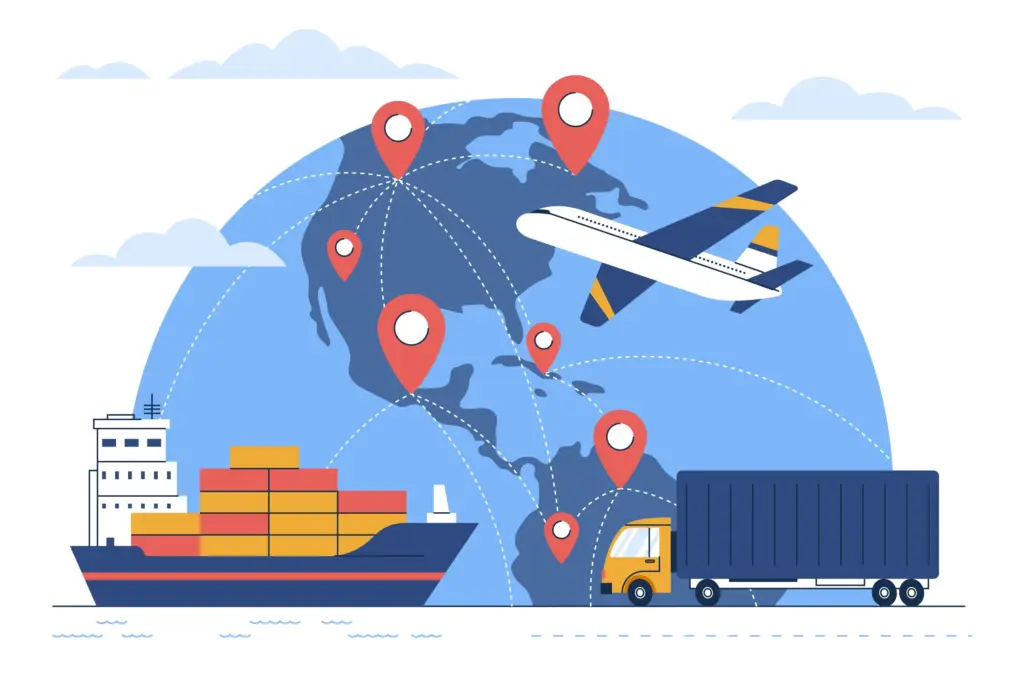
How is the international transportation of goods carried out?
International transportation of goods is a multi-stage process designed to move a shipment from the country of origin to the country of destination. This process encompasses route planning, selecting the mode of transport, preparing the goods, compiling commercial documentation, coordinating the shipment, completing customs formalities, and delivering the cargo.
For importers and exporters, understanding the stages of international shipping is crucial; proper planning can help reduce additional costs, prevent delays, and improve supply chain management.
Stage One: Defining the Specifications of the Goods
The first step in international shipping is providing precise information regarding the shipment.
The required information typically includes the following:
- Name and type of product
- Number of packages
- Net and gross weight
- Packaging dimensions
- Total cargo volume
- Country and city of origin
- Destination country and city
- Special storage or transportation conditions
- Commercial value of goods
Detailed shipment information helps the freight forwarder determine the appropriate transport method, necessary equipment, and potential costs.
Step Two: Selecting the Transport Method
Once the product specifications have been reviewed, the appropriate transport method must be selected.
The primary methods of international transport include:
Air Freight
Suitable for urgent shipments, high-value goods, and cargo where delivery time is critical.
Sea Freight
Suitable for large-volume shipments, containerized cargo, less-than-container-load (LCL) shipments, and certain bulk goods that can be transported via sea routes.
Land Transport
Suitable for international road routes, regional transport, commercial goods, and shipments that can be transported by truck.
When selecting a transport method, factors such as cost, transit time, the nature of the goods, and route conditions must be considered simultaneously.
Step Three: Obtaining a Freight Quote
Once the shipment details and the transport method have been determined, you can proceed to obtain freight rates.
International shipping costs may encompass various components, including:
- Main freight charges
- Origin charges
- Destination charges
- Loading and unloading costs
- Potential warehousing costs
- Costs for documentation and related services
- Customs charges or clearance services (if agreed upon and provided)
For this reason, when obtaining a quote, it is essential to clarify which services are included in the quoted price and what costs might be charged separately.
Step Four: Preparation and Packaging of Goods
Proper packaging plays a crucial role in ensuring the goods remain in good condition throughout the transit process.
The type of packaging chosen must be appropriate for the nature of the goods, their weight, dimensions, the mode of transport, and the handling conditions.
For fragile items, the use of protective materials is essential. For heavy shipments, the packaging and securing of the cargo must be executed in a way that ensures safe handling and transport.
For certain types of goods, the use of wooden packaging or other specific packing materials may be subject to particular standards or regulations.
Step Five: Preparation of Shipping Documents
The documentation required for international shipping varies depending on the type of goods, the country of origin, the destination, the mode of transport, and applicable laws.
Some common documents include:
Commercial Invoice
A commercial invoice contains details regarding the seller, the buyer, product specifications, quantity, price, and transaction information.
Packing List
A packing list provides information about the shipment’s packaging, the number of packages, weight, dimensions, and the contents of each package.
Transport Document (Bill of Lading / Air Waybill / CMR)
The type of transport document depends on the mode of transport. For sea freight, a Bill of Lading is issued, while for air freight, an Air Waybill is used. In international road transport, specific road transport documents are used, in accordance with the route and applicable regulations.
Supplementary Documents and Permits
Certain goods may require a Certificate of Origin, import or export permits, health/sanitary certificates, standards compliance documents, or other types of documentation.
Preparing accurate documentation from the outset can help minimize complications during the shipping process and customs formalities.
Step Six: Loading and Commencement of Transport
Once the goods are ready and all arrangements have been finalized, the shipment is transported to the designated loading site or terminal.
At this stage, depending on the mode of transport, the process involves loading the cargo, handing it over to the carrier, processing documentation, and making arrangements for the shipment’s transit.
In sea freight, the goods may be transported to a port; in air freight, the cargo is delivered to an airport; and in land transport, it is handed over to the designated vehicle.
Step Seven: Tracking the Shipment Status
Tracking the status of the goods throughout the journey allows the cargo owners to stay informed about the transit process and plan for receiving the goods at the destination.
Information regarding the shipment status can be accessed based on the type of service, shipping documents, tracking systems, and coordination provided by the carrier.
On certain routes, the goods may undergo changes in the mode of transport, stops at terminals, or border crossings.
Step Eight: Customs Formalities
Upon the arrival of the goods in the destination country, customs formalities and document verification are carried out, depending on the nature of the transaction, the type of goods, and the regulations of the country.
The import process may require the submission of commercial documents, declaration of goods, payment of applicable duties and taxes, and the procurement of necessary permits.
At this stage, factors such as the nature of the goods, customs tariffs, import regulations, and the specific conditions of the destination country are of great importance.
Step Nine: Delivery of Goods to the Final Destination
Once the procedures related to the destination are completed and the shipment is ready for handover, the goods are transported to the consignee or the designated location.
At this stage, the shipment details, the number of packages, and the physical condition of the goods must be verified to ensure the delivery process is carried out in a well-coordinated manner.
How can international shipping costs be reduced?
To better manage shipping costs, the following points may be considered:
- Selecting a shipping method appropriate for the timeline and volume of the goods
- Carefully verifying the dimensions and weight of the shipment
- Proper packaging to avoid unnecessary space usage
- Planning the shipment well in advance
- Requesting a quote by providing full shipment details
- Reviewing additional costs before finalizing the shipment
- Choosing a route suitable for the type of goods and the destination
Careful planning during the initial stages can help manage costs more effectively and minimize potential issues.
International Shipping with Azim Tarabar
Azim Tarabar International Transport Company assists merchants and cargo owners in planning and coordinating the shipment process by providing air, sea, and land freight services.
Depending on the type of goods, origin, destination, and shipping requirements, suitable options can be evaluated to plan the transport of your cargo.
If you are planning to ship or receive goods internationally, please provide the details of your shipment to receive professional consultation and a shipping cost estimate.