What Is International Land Transport?
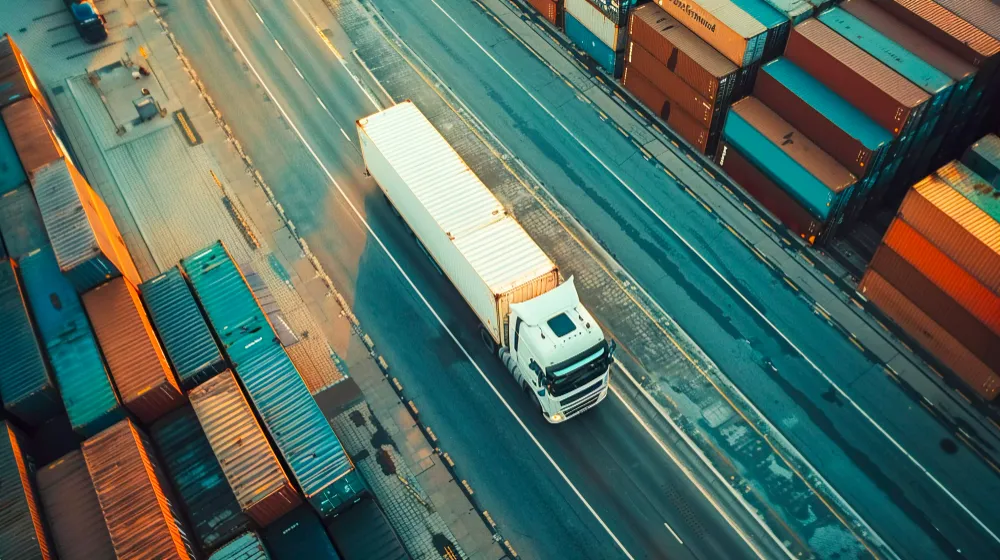
International land transport refers to the movement of goods between different countries via road networks and freight vehicles. This method serves as a key solution in regional and international trade, facilitating the transport of a wide range of goods—from raw materials and commercial products to industrial equipment and specialized cargo.
On many trade routes, land transport is highly valued by cargo owners due to its flexibility in route selection, the ability to deliver to various locations, and the capacity to tailor logistics planning to the specific requirements of the shipment.
Key factors in planning international land transport include selecting the appropriate vehicle, evaluating the route, considering border conditions, assessing the nature of the goods, and preparing the necessary documentation.
Types of Trucks in International Transport
The choice of truck depends on the dimensions, weight, and nature of the goods, as well as loading and unloading conditions and the transport route.
1. Tautliner (Curtain-Sided) Truck
Curtain-sided trucks (tarp-covered trucks) are a common means of transporting commercial goods. The curtain cover protects the cargo from environmental conditions, and certain models allow for loading from the sides, the rear, or the top.
This type of truck is used for transporting packaged goods, pallets, industrial products, and any cargo that does not require specific temperature-controlled conditions.
2. Refrigerated Trucks
Refrigerated trucks are used for transporting goods that require temperature control. These vehicles are equipped with cooling systems, allowing for the adjustment of temperature conditions to suit the specific type of cargo.
Certain food products, specific pharmaceuticals, and temperature-sensitive goods may require refrigerated transport. The appropriate temperature and transport conditions must be determined based on the specifications of the goods.
3. Trucks for Heavy and Ultra-Heavy Cargo
Specialized heavy-haul equipment may be employed for the transport of industrial machinery, project equipment, large components, and cargo that exceeds standard weight or dimensional limits.
In this type of transport, careful assessment of axle loads, cargo dimensions, route constraints (such as bridges and road conditions), and the acquisition of necessary permits is of critical importance.
4. Trucks for High-Volume Cargo
Some goods may not be particularly heavy, yet they occupy a significant amount of space due to their large volume. In such cases, selecting a vehicle with appropriate volumetric capacity can directly impact both operational efficiency and transport costs.
Advantages of International Overland Transport
Route Flexibility
On many road networks, it is possible to plan routes tailored to the specific origin, destination, and nature of the cargo.
Versatile Delivery Options
In regions with adequate road infrastructure, overland transport enables the delivery of goods directly to warehouses, factories, or distribution centers.
Well-Suited for Regional Transport
For trade routes between neighboring countries and regions with good road connectivity, land transport is an option worth considering.
Variety of Transport Equipment
The availability of various trucks, trailers, and specialized equipment allows for the selection of a vehicle suited to the specific cargo.
How are land transport costs calculated?
The cost of international road transport depends on several factors, including:
- Countries and cities of origin and destination
- Transport distance and route
- Type of truck required
- Weight and dimensions of the cargo
- Type of goods and storage requirements
- Border and transit costs
- Conditions of the transport market
- Permits required for specific types of goods
- Loading and unloading costs
To calculate the exact cost, it is essential to provide the shipping company with complete details regarding the shipment.
Stages of International Overland Freight Transport
Road transport typically follows the steps outlined below:
- Obtaining cargo and route details
- Determining the required type of vehicle
- Assessing route and border crossing conditions
- Providing cost estimates and transport schedules
- Coordinating loading and preparing documentation
- Transporting goods via land routes
- Tracking the shipment status
- Handling destination procedures and cargo delivery
For certain routes, depending on the nature of the goods and the regulations of the countries involved, additional documentation or permits may be required.
When is land transport the right choice?
Land transport is a suitable option for shipments that can be moved via the road network, taking into account the route, transit time, and cost.
If the volume of goods is large, or if a sea route offers a cost advantage, sea freight should also be considered. For urgent or time-sensitive shipments, air freight may prove to be a more appropriate option.
Land Transport Services by Azim Tarabar
Azim Tarabar International Transport Company provides land freight services using a variety of vehicles—including curtain-sided and refrigerated trucks—as well as specialized equipment designed for heavy and bulky cargo.
To receive a consultation regarding land transport, please provide details such as the origin, destination, type of goods, weight, and dimensions of the shipment, so that the route and transport conditions can be assessed.